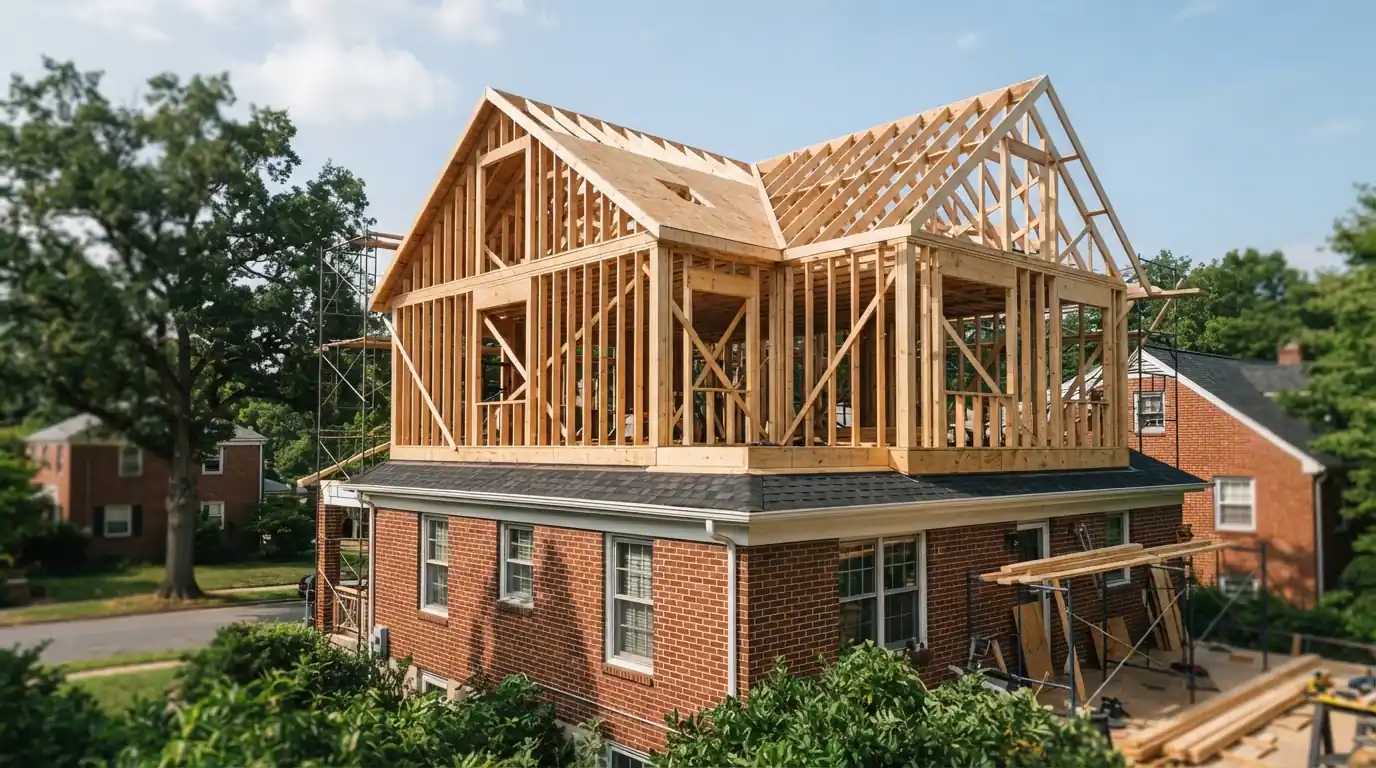
Adding space to your Baltimore-area home is a popular choice for many homeowners. Instead of moving, people in places like Columbia, Catonsville, Towson, and Severna Park often choose to expand their living space. An addition can give you the extra bedroom, larger kitchen, or dedicated home office you need. It's a big project. Doing it right takes careful planning and the right team.
Let's talk about how to approach your home addition project the right way, from the initial ideas to choosing a reliable contractor.
What Kind of Addition Do You Need?
The first step is figuring out what you actually want to build. An "addition" can mean a lot of things. It might be a small bump-out to expand your kitchen or dining room. This adds a few feet, usually on the first floor. It often requires less extensive new foundation work. Major changes to the existing roofline may not be needed.
Or maybe you're thinking about a full-scale new wing. This could be a multi-room expansion. Perhaps you want a family room and a new bathroom on the ground floor. A second-story addition over an existing garage or single-story section of your home is another option. A second-story addition is more complex. It requires reinforcing the existing structure. It must support the new weight. It also involves tying into the existing roof. Utilities often need relocating. Homes in Owings Mills or Cockeysville with larger lots might allow for more expansive ground-level additions. A row home in Federal Hill has very different constraints. It might only allow a small rear addition or a third-story pop-up.
Think about your current needs. Consider your future needs too. Are you adding space for a growing family? Do you need a dedicated workspace? A clear vision will guide the design. This helps you budget more accurately.
Understanding Local Zoning and Permits
Before you even think about swinging a hammer, you need to understand the local rules. Zoning ordinances and building codes have distinct requirements. These vary between Baltimore City, Baltimore County, Howard County (where Columbia is), and Anne Arundel County (where Severna Park is). These rules dictate what you can build. They also cover where on your property you can build it. And how large it can be.
For example, setback requirements – how far your addition must be from property lines – can differ significantly. Lot coverage limits are also common. These cap the percentage of your lot that can be covered by impervious surfaces. This includes your house, driveway, and patios. Historic districts in places like Canton or Annapolis will have additional layers of review. Specific aesthetic requirements apply. They often require approval from a local architectural review board before the permit process even begins.
Your contractor will help you with the permit process. But it's good to know what's involved. You'll need architectural drawings, site plans, and detailed construction documents. These are submitted to the local permitting office. Examples include Baltimore County's Department of Permits, Approvals and Inspections (PAI) or Howard County's Department of Inspections, Licenses and Permits. Getting permits can take weeks. Sometimes it takes months. This is especially true for larger or more complex additions. Don't rush this step. Building without the correct permits can lead to fines. It can also cause stop-work orders. You might even have to tear down completed work.
Budgeting Realistically for Your Addition
Adding space to your home is a substantial financial commitment. Costs vary widely. This depends on the size, complexity, materials, and local labor rates.
Several factors drive the cost:
- Size and Scope: More square footage, more rooms, and more complex designs always mean higher costs. Adding 300 square feet will be less expensive than adding 800 square feet.
- Materials: High-end finishes, custom windows, or premium siding will increase your budget. Standard materials are more economical.
- Site Conditions: Difficult access to your property (e.g., a tight alley for a Federal Hill row home), rocky soil, or the need for extensive excavation can add to foundation costs. Challenging site prep can add to your expenses.
- Structural Changes: If your addition requires major changes to your home's existing structure, like removing load-bearing walls or reinforcing foundations, expect higher costs. Opening up a space with a new beam is an extra cost.
- Utilities: Extending plumbing, electrical, and HVAC systems to the new space is a given. If your existing systems need upgrades to handle the new load, that's another expense. This could involve a new electrical panel.
Always build a contingency fund into your budget. Unexpected issues, especially in older Baltimore homes, are common. For instance, discovering asbestos in old floor tiles or lead paint during demolition can add thousands to your project for proper abatement.
Finding the Right Home Improvement Contractor
Choosing your contractor is a very important decision. You need a licensed, reputable home improvement contractor. In Maryland, that means a contractor with an MHIC (Maryland Home Improvement Commission) license. This license protects homeowners. It sets standards for contractors. The MHIC requires contractors to pass an exam. They must show financial solvency. They must carry insurance.
When you're searching for "home improvement contractors Columbia MD" or "home additions Towson MD," here’s what to look for:
- MHIC License: Always verify the contractor's MHIC license number. Our MHIC license is #05-147079. You can check any contractor's license status on the Maryland Department of Labor's website. This confirms they meet the state's requirements.
- Experience with Additions: Ask for examples of similar addition projects they've completed. A contractor specializing in kitchens might not have the structural expertise for a two-story addition. Request a portfolio with photos and details.
- Clear Communication: The contractor should be responsive. They should answer your questions directly. They should explain the process in plain language. You should feel comfortable asking questions. You deserve clear answers about scheduling, materials, and potential changes.
- Detailed Estimates and Contracts: A good contractor provides a straight estimate. It breaks down costs clearly. The contract should outline the scope of work, payment schedule, timeline, and responsibilities. You can learn more about this process by reading our post, How to Read a Baltimore Contractor's Estimate.
- References: Ask for references from past clients. Choose clients who had similar projects. Speak with them about their experience. Focus on communication, adherence to budget, and quality of work.
Top Notch Contractors has been remodeling Baltimore homes since 2010. We pride ourselves on straight estimates. We provide clear contracts. Our work is code-correct. We understand the specific challenges and opportunities. These come with building additions in communities from Catonsville to Cockeysville. For more general information on working with contractors in the area, check out our home improvement contractors Baltimore service page.
Understanding the Project Timeline
A home addition is not a quick project. From start to finish, you should expect a process that can take many months.
Here’s a rough breakdown:
- Design and Architectural Plans: This phase involves working with an architect. You finalize your vision. You get structural engineering input. Detailed drawings are created.
- Permit Acquisition: This means submitting your plans to the local jurisdiction. Then you wait for approval. This timeline is outside the contractor’s control. It can vary.
- Construction: This includes site preparation, foundation work, and framing. Roofing and exterior finishes follow. Rough-ins for plumbing, electrical, and HVAC are next. Then insulation, drywall, and interior finishes. Finally, there are final inspections.
Weather, material delays, and unforeseen site conditions can all impact the timeline. Your contractor should provide a realistic schedule. They should keep you updated on progress.
Specific Considerations for Baltimore Area Homes
Baltimore's housing stock is diverse. This means your addition project might have unique considerations.
- Row Homes: If you're planning an addition to a row home, particularly in areas like Federal Hill or Fells Point, space is at a premium. Additions are often limited to the rear of the property. Or they involve adding a third story. Site access can be very tight. This impacts material delivery and equipment use. Getting a dumpster into a narrow alley behind a Canton row home can be a logistical puzzle. We've written more about this in our Baltimore Row Home Renovation: 2026 Planning post.
- Older Homes: Many homes in Hampden, Roland Park, or Catonsville are decades, if not a century, old. They might have outdated electrical systems. They could have knob-and-tube wiring. Or lead paint. Integrating a new addition with these older systems requires careful planning. It often means upgrades to the existing house. For instance, a new addition will require modern wiring and GFCI outlets. Tying into an older system may necessitate a full electrical panel upgrade to meet current code.
- Suburban Lots: In areas like Columbia, Towson, or Owings Mills, lots tend to be larger. This offers more flexibility for ground-level additions. However, you still need to respect setbacks and impervious surface rules. A large lot in Reisterstown might allow for a sprawling single-story addition, but you'll still need to make sure it doesn't exceed the lot coverage limits set by Baltimore County.
Adding space to your Baltimore-area home is a big project. With careful planning and the right contractor, you can create the space you've always wanted. We serve many of these areas. You can find out more about our work in Columbia on our Columbia service page.
Thinking about a home addition in the Baltimore area? Let's talk about your ideas and see how Top Notch Contractors can help. Visit our website or call us today to schedule a consultation.
Planning a project like this? Call Top Notch Contractors at 410-598-9933 for a straight estimate. We're a licensed Maryland home-improvement contractor (MHIC# 05-147079) remodeling Baltimore homes since 2010.